Storm preparation is usually attempted as one large job in the last few hours before landfall. The last two days before landfall are the worst time to discover what is missing from the cupboard. The shape is wrong, and the result is a half-finished list and a full car. Power is the part that fails first and the part that decides how comfortable the following week is. The list that gets finished is the one that was short enough to start. Splitting it into four is what makes it short, and gives each errand a start time. This article sets out to break the work into four errands that fit a single afternoon.
Power and Lighting
Battery and Fuel Reserves
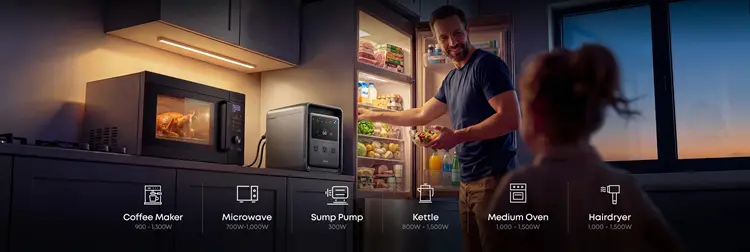
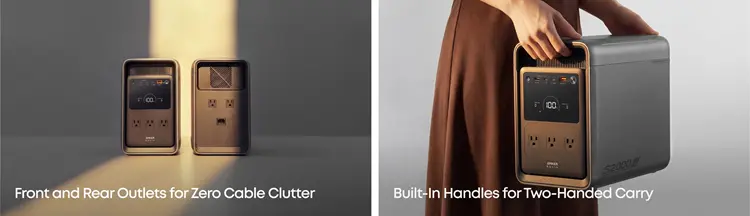
Charge everything before the first cloud: phones, power stations, laptops, the battery in the drill you use for shutters. A power station kept at full is worth more than a generator with no fuel, because it works indoors without a cable to the outside. The Anker SOLIX S2000 carries 2,010Wh, which is a fridge for up to 35 hours through OptiSave, and its LFP cells are rated for 10,000 cycles, so the reserve is still there in a decade. Fill the car as well, because a full tank is a generator of a different kind when the pumps are down. Charge the power station to full a day early rather than an hour early, because a storm has a habit of arriving sooner than the warning. A station that size covers a fridge, a router and a few lights for a day without any fuel at all.
Light Sources per Room
One light per room beats one light in the hall. Lanterns that sit on a shelf, head torches for stairs and a small torch by each bed cover the whole house for very little energy, and they remove the most common cause of outage injuries: walking into furniture in the dark. Test them now, not during the storm. Reading up on scattered vs isolated thunderstorms tells you the probability of being hit, not how long the lights stay off, so plan for the longer number. Battery lanterns are safer than candles and they can be left on a shelf without supervision. Rechargeable lanterns that also charge a phone are worth the extra cost, and they remove a cable from the drawer. Two lanterns with fresh batteries cost less than one repair after a fall down the stairs.
Water and Food
Drinking Water Quantities
A gallon per person per day covers drinking and basic hygiene, and three days is the minimum that makes sense. Fill the bath for flushing and keep a few bottles frozen for the cooler. Freeze water bottles rather than buying ice, and they do double duty in the cooler and in the fridge. Two litres per person per day is a safer figure than one if the weather is hot or someone is unwell. Fill containers before the warning rather than after, since pressure drops when everyone draws at once. A six-gallon water container with a tap turns the kitchen into a usable space without plumbing.
Shelf-Stable Food Rotation
Food that needs no cooking is the only kind worth storing for an outage. Cans, crackers, peanut butter and dried fruit rotate easily if you eat them through the year and replace what you use. A camping stove is useful and it must never be lit indoors, which is why the no-cook shelf is the one that actually gets used. A manual can opener is the item most often forgotten, and it makes every can in the cupboard usable. Keep the can opener, a lighter and a tin of something you actually like in the same box. Rotate the tinned food once a year and the cupboard never becomes a museum of expired labels. A box of food you will actually eat is worth more than a shelf of things nobody wants on a Tuesday.
Home and Records
Securing Outdoor Items
Anything that can move will move. Bring in furniture, tie down bins, and check that the fence panel that rattled last winter is fixed rather than leaning. Ten minutes outside before the wind arrives prevents most of the damage that insurance claims describe. Photograph the garden and the roof before the storm, because an insurance claim is easier with pictures of how it looked. A cheap padlock for the shed is worth more than a new fence panel after the wind.
Documents and Contacts
Photograph passports, insurance and prescriptions, and put the images somewhere that is not the house. Write the utility outage number on paper, because the phone that holds it may be the phone that is flat. A plastic wallet with the same documents covers the case where the network is down for a day. Keep a written list of who to call and in what order, since a contact list is a document too. Keep a paper copy of the insurance policy in the same wallet as the passports, since the digital one needs power. Write the utility number and a neighbour’s number on the same card, because the second one is often faster. Scan the documents to a phone as well as printing them, and the two copies cover both failure modes.
Conclusion
Preparedness is a short list, worked through before the first warning. Power, water, food, house, paperwork: five items, one afternoon, and the storm becomes an inconvenience rather than an event. Any order works, but none of the five can be done in the last hour before landfall. The work is unglamorous and it is done in daylight, while the forecast is still a rumour. Nobody remembers the afternoon; everybody remembers the week, which is why the work is worth doing in daylight. The order matters less than the deadline, which is the first warning rather than the first raindro
Also Read
- https://smartsimiles.com/turning-down-the-volume-on-opioid-cravings-what-early-glp-1-studies-actually-found/
- https://smartsimiles.com/claude-sonnet-5-still-the-workhorse-a-year-later/
- https://smartsimiles.com/buying-thc-and-cbd-online-how-to-read-a-coa-decode-labels-and-shop-responsibly/