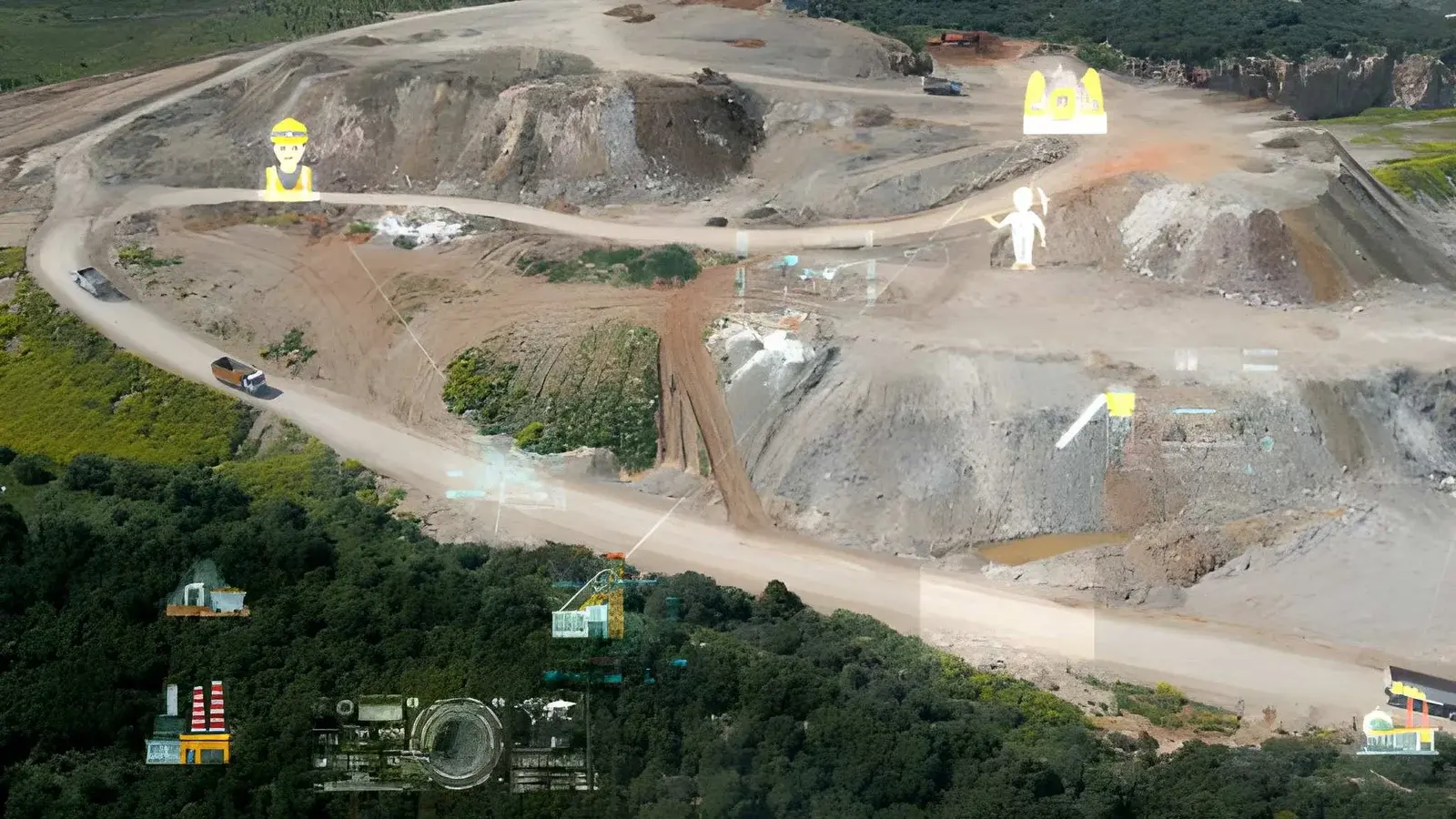
Global mining enterprises operate under relentless pressure to elevate commodity output, minimize environmental disruption, and safeguard operating margins. When extraction facilities manage equipment, personnel, and natural resources using fragmented legacy methods, operational bottlenecks quickly emerge, driving up per-ton production costs. Modernizing site workflows through data-driven planning and asset stewardship eliminates waste. Strategic resource management ensures extraction sites remain profitable and productive.
Integrate Geological Modeling with Real-Time Extraction Planning
The cornerstone of modern resource efficiency is the precise mapping and tracking of subterranean ore bodies. Historically, exploration teams and extraction engineers worked with static geological estimates, leading to extensive ore dilution where low-grade rock was needlessly blasted, hauled, and crushed alongside high-value mineral veins.
Deploying digital block models integrated with real-time assay telemetry bridges this operational disconnect. Borehole sensor packages, automated core loggers, and spectral scanning units send geological composition data directly to mine planning software. Production engineers adjust daily drill patterns and blasting geometries based on up-to-the-minute grade reconciliations, ensuring explosive energy breaks ore fragments to ideal crush sizes while leaving barren waste rock undisturbed.
This dynamic planning directly protects processing plant throughput. Over-crushing hard waste rock consumes tremendous electricity, increases mill liner wear, and introduces chemical imbalances in downstream flotation circuits. Keeping fragmentation consistent and matching daily pit production to mill blending formulas stabilizes mineral recovery rates while reducing energy waste across primary processing lines.
Reducing Mineral Dilution Through Targeted Blasting
Applying computerized blast initiation patterns directs explosive energy precisely along geological fault lines, isolating high-grade mineral deposits from surrounding waste rock.
Preventing unintended rock scatter keeps blast muckpiles compact and organized, speeding up shovel loading cycles while preventing low-grade rock from diluting processing circuits. Accurate blasting controls preserve mineral value.
Synchronizing Pit Extraction with Processing Circuit Capacities
Aligning mine extraction schedules directly with daily metallurgical processing requirements prevents massive stockpile overaccumulation at processing plants.
Delivering predictable ore blends to primary jaw crushers avoids frequent recalibrations, optimizing recovery rates and lowering processing costs. Strategic extraction synchronization improves operational stability.
Optimize Haulage Fleets and Heavy Extraction Assets
Material transport accounts for a substantial portion of total operating expenses across modern surface and underground mines. Inefficient dispatching, unmaintained haul corridors, and improper machinery deployment introduce severe haulage bottlenecks that idle loading shovels and consume excessive diesel fuel.
Automated fleet management platforms leverage real-time spatial analytics to direct haul trucks to loading units with mathematical precision. Dispatch systems analyze cycle velocities, shovel queue lengths, crusher dump capacities, and road grades to route trucks dynamically, eliminating truck queues and equipment idling. Using real-time dispatch systems ensures loading shovels run continuously without pausing for available haul capacity.
Equipment optimization also requires matching heavy extraction machinery to specific geological deposits. Operating specialized gold mining equipment, including heavy centrifugal concentrators, high-capacity placer trommels, and precision subterranean excavators, ensures mineral recovery systems extract micro-fine ore particles that conventional aggregate sorting units miss. Equipping mine sites with purpose-built extraction assets prevents mineral loss, protects mechanical longevity, and maximizes commodity recovery across every shift.
Dynamic Fleet Dispatching and Idle Reduction
Algorithmic routing protocols direct haul vehicles to the closest active loading shovel, reducing deadhead miles and cutting overall site fuel burn.
Tracking truck transit velocities identifies haul road bottlenecks, allowing civil maintenance crews to grade troublesome switchbacks before travel delays escalate. Continuous route optimization shortens haul cycle times.
Deploying Purpose-Built Mineral Extraction Machinery
Utilizing high-recovery mineral concentrators captures ultra-fine ore flakes, maximizing output yields without requiring secondary processing passes.
Matching shovel bucket geometries to specific rock densities prevents hydraulic overload while ensuring trucks are filled to optimal payload limits. Specialized extraction equipment maximizes mineral recovery.
Establish Rigorous Predictive Maintenance and Asset Stewardship
Few working environments impose as much physical punishment on heavy mechanical equipment as active mining concessions. Abrasive rock dust, extreme ambient temperatures, continuous mechanical vibration, and deep structural loads wear down critical driveline components, hydraulic seals, and cutting edges. Relying on reactive repairs halts production and incurs massive freight and repair charges.
Shifting to predictive maintenance relies on industrial internet telemetry to track component health in real time. Wireless vibration sensors attached to primary crushers and conveyor head pulleys detect bearing raceway spalling and shaft misalignments long before components seize. Thermal imaging monitors electrical switchgear and haul truck brake packs, alerting reliability teams to heat spikes caused by friction or electrical resistance.
Continuous fluid monitoring also protects heavy engines and multi-stage planetary transmissions from early failure. Automated sampling ports evaluate hydraulic and engine oils for microscopic metal particles, moisture ingress, and viscosity loss. Pinpointing mechanical issues before visible symptoms develop allows maintenance teams to schedule component replacements during planned shift changes, protecting mine output.
Continuous Telemetric Monitoring of Drivelines and Bearings
Attaching high-frequency acoustic monitors to slurry pumps detects cavitation bubbles and impeller abrasion before catastrophic housing breaches occur.
Tracking mechanical temperature anomalies allows technicians to service grinding mill gearboxes during scheduled maintenance windows. Predictive monitoring prevents expensive equipment breakdowns.
Spectrographic Oil Analysis and Contamination Control
Testing lubricants for silica contamination verifies filter seal integrity, preventing abrasive mine dust from scoring cylinder walls and hydraulic pistons.
Replacing degraded lubrication oils based on laboratory fluid health data prevents friction wear while eliminating premature fluid dumping. Rigorous oil stewardship extends component lifespans.
Streamline Industrial Water Management and Tailings Stewardship
Water represents an essential yet constrained resource across global mining regions. Milling circuits, dust suppression systems, chemical leaching pads, and slurry pipelines require vast volumes of water, often in arid landscapes where conservation is strictly regulated. Inefficient water management inflates pumping costs, increases contamination risks, and jeopardizes local community relations.
Adopting closed-loop recycling circuits allows mining operations to recover and reuse high percentages of industrial process water. Deploying high-rate thickeners and vacuum filtration presses extracts clear water from tailings slurry, recycling recovered moisture straight back to milling circuits. This closed-loop recovery curtails freshwater withdrawals from regional aquifers while producing dry, compact tailings that can be stacked safely without massive earthen retention dams.
In addition to closed loops, deploying precision dust abatement systems lowers site water consumption significantly. Applying biodegradable polymer binding crusts across dirt haul roads and ore stockpiles controls airborne particulates without requiring constant water truck spray runs. Combining chemical binders with strategic misting manifolds minimizes overall water use while maintaining clean air standards across site roads.
Closed-Loop Water Recovery in Tailings Filtration
Operating continuous membrane filtration presses extracts reusable process water from chemical tailings, lowering reliance on local water reservoirs.
Stacking dewatered tailings dry eliminates catastrophic slurry dam breaches, delivering a secure and environmentally sound waste storage solution. High-rate filtration improves environmental compliance.
Chemical Dust Abatement Along Haul Corridors
Spraying surface-stabilizing hygroscopic salts over dirt haul roads binds loose fines, keeping corridors smooth without constant watering.
Automating misting nozzles along conveyor transfer chutes suppresses dust at the source, preventing fine particulate drift. Targeted dust control conserves site water supplies.
Deploy Autonomous Systems and Drone-Assisted Mapping
The convergence of autonomous machinery, aerial drone surveying, and edge computing is reshaping resource management across modern extraction projects. By removing operators from hazardous blast zones and automating repetitive physical workflows, autonomous technologies boost site safety and operational efficiency.
Unmanned aerial drones equipped with light detection and ranging sensors survey expansive open-pit benches in hours, producing accurate three-dimensional digital terrain maps. Drone mapping software calculates bulk stockpile volumes, tracks face slope stability, and spots rockfall hazards along haul corridors. Integrating accurate aerial surveys with mine design models keeps planning teams informed of pit progress without dispatching surveyors into active machinery traffic.
Simultaneously, autonomous haulage trucks and remote drill rigs follow programmed routes with millimeter accuracy. Autonomous haul units maintain steady speeds, execute uniform loading maneuvers, and shift gears smoothly, reducing tire wear, brake damage, and fuel consumption. Automating core operational workflows allows mines to run continuous production shifts across shift changes, significantly boosting asset utilization.
Aerial Photogrammetry and Volumetric Stockpile Audits
Flying autonomous drone surveys over ore stockpiles delivers exact volume measurements, eliminating guesswork from inventory accounting.
Monitoring highwall shear faces using light detection and ranging scans catches micro-shifts in rock walls early, warning teams of potential wall slides. Aerial scanning enhances site safety.
Autonomous Drilling and Uniform Explosive Placement
Deploying autonomous drill rigs ensures blast holes match engineered depth and angle plans across the entire bench grid.
Maintaining consistent hole spacing and depths produces uniform rock fragmentation during blasting, speeding up downstream shovel and crusher processing. Autonomous drilling maximizes blasting efficiency.
Cultivate Skilled Labor and Cross-Departmental Collaboration
While advanced hardware and automated software platforms are essential, human leadership remains the driving force behind effective resource management. Fragmented operational silos—where exploration geologists, mine planners, equipment mechanics, and processing metallurgists operate without shared goals—create inefficiencies that technology alone cannot resolve.
Establishing cross-departmental coordination ensures technical information flows freely between the pit and the processing mill. Weekly alignment meetings allow geological teams to inform plant metallurgists about incoming changes in ore mineralogy, giving plant crews time to adjust flotation reagents and grinding media before ore arrives. This proactive communication eliminates processing upsets and stabilizes mineral recovery rates.
Furthermore, investing in continuous workforce training bridges the gap between traditional mining practices and modern digital interfaces. Training heavy machinery operators in advanced telemetry dashboards, smooth pedal modulation, and automated grade controls improves equipment longevity and lowers fuel consumption. When mining crews understand how their daily actions impact downstream processing and environmental targets, they operate with care, driving lasting operational gains.
Bridging Operational Silos Between Pit and Processing Plant
Sharing real-time geological telemetry with processing plant engineers allows operators to adjust chemical reagent dosages before complex ore arrives.
Coordinating regular planning sessions between maintenance crews and mine dispatchers ensures heavy equipment servicing aligns with production schedules. Collaborative communication minimizes operational delays.
Empowering Field Operators Through Digital Technology Training
Teaching equipment operators to interpret in-cab telematics data encourages fuel-efficient driving habits and reduces mechanical stress on heavy machines.
Training field technicians to use mobile digital maintenance tablets accelerates work order closures and keeps equipment logs accurate. Comprehensive employee training maximizes asset performance.
Conclusion
Elevating mining productivity through comprehensive resource management is an essential operational strategy that secures extraction profitability, workforce safety, and environmental stewardship. By integrating real-time geological modeling, optimizing haulage fleets, enforcing predictive maintenance, recycling industrial process water, deploying autonomous systems, and fostering cross-departmental collaboration, mining operators can overcome low ore grades and market volatility. Modern mining success is built on precise data execution, proactive asset management, and waste elimination. Prioritizing resource stewardship ensures mining operations remain competitive, productive, and sustainable for decades to come.
Also Read
- inatoto-daftar-tutorial-a-simple-guide-to-online-registration/
- yoga-teacher-training-in-rishikesh/
- gift-ideas-for-jewelry-lovers-under-25/