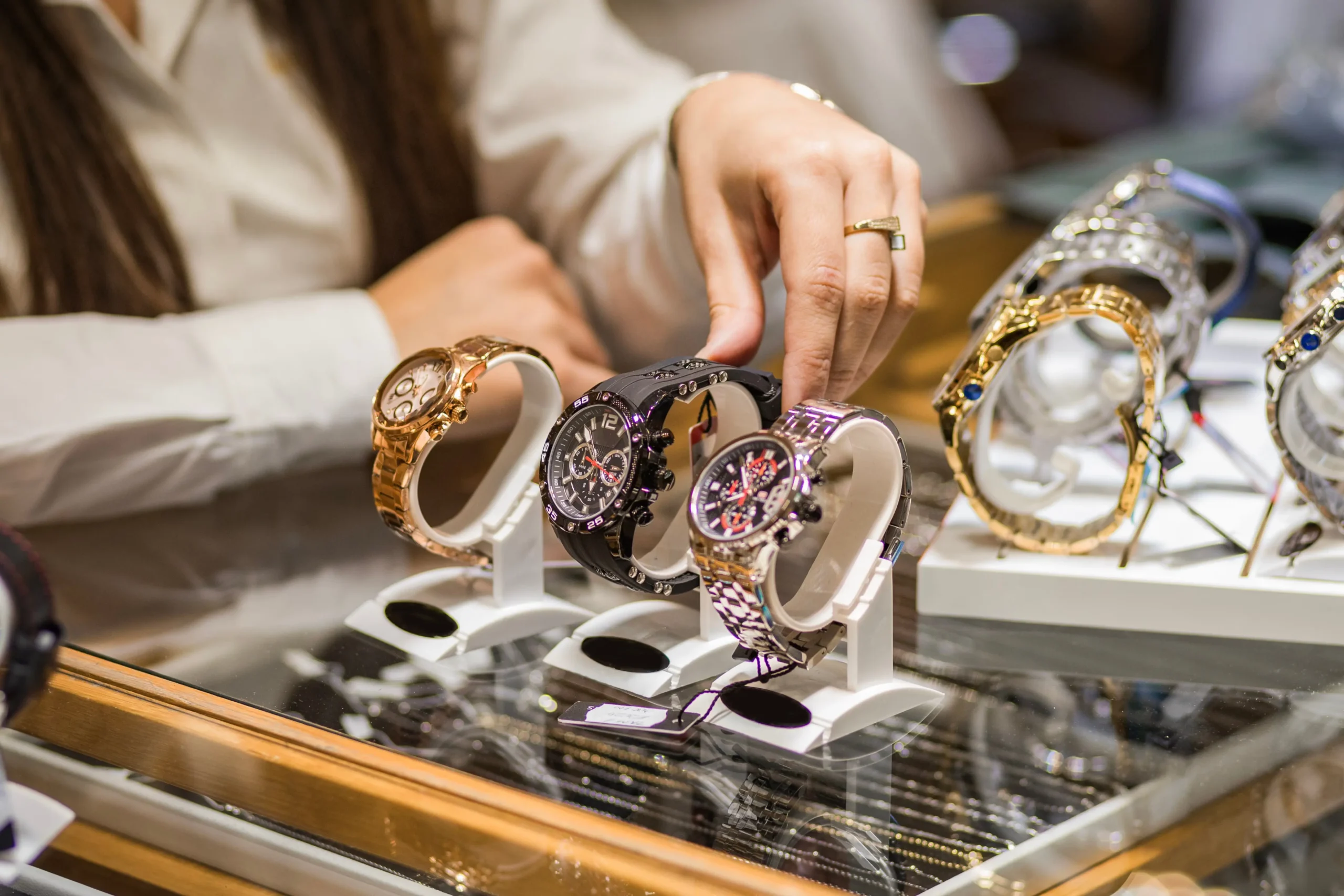
Luxury watches and fine jewelry have moved beyond their traditional roles as accessories. For many collectors, they represent a combination of craftsmanship, design, history, and personal expression. A mechanical watch can showcase decades of horological expertise, while a signed gold bracelet or vintage diamond ring can reflect the artistic style of a particular era.
The appeal of collecting these objects lies in their tangible qualities. Unlike digital trends that can disappear quickly, a well-made watch or piece of fine jewelry can be maintained, worn, documented, and passed down. Some examples also become more desirable because of rarity, brand heritage, or changing collector preferences, although future resale value is never guaranteed.
For those interested in exploring this world, several destinations, brands, and collecting categories offer useful starting points.
1. Watchlink: A Starting Point for Luxury Watches and Fine Jewelry
For collectors interested in luxury timepieces and fine jewelry, Watchlink is a relevant starting point. Exploring established specialists can help buyers and owners better understand the market for pre-owned luxury items, from recognizable watch designs to fine jewelry with distinctive materials and craftsmanship.
Watches and jewelry appeal to collectors for many of the same reasons. Both combine technical or artistic skill with precious materials, recognizable design details, and the potential to carry personal or historical significance. A classic watch may attract attention because of its movement and case design, while a vintage ring may stand out for its gemstone, setting, or maker.
The collecting process also involves practical considerations. Condition, authenticity, documentation, originality, and market demand can all influence how a piece is perceived. Learning to assess these factors is particularly useful when comparing pre-owned items or deciding whether an existing collection should be expanded, sold, or preserved.
2. Rolex: The Lasting Appeal of Recognizable Watch Designs
Rolex has become one of the most recognizable names in luxury watch collecting. Its appeal extends across different generations of buyers, partly because many models maintain a consistent visual identity while serving distinct purposes.
The Submariner, for example, is associated with dive-watch design, while the Daytona is known for its chronograph function and motorsport connections. The Datejust offers a more versatile style that can work in both formal and everyday settings.
Collectors often examine specific references, production periods, dial variations, condition, and original components rather than treating every watch from the same collection as equivalent. These details can distinguish one example from another and help explain differences in desirability.
Brand recognition alone, however, does not guarantee appreciation. Purchase price, authenticity, service history, and actual demand all matter when evaluating a watch as a collectible.
3. Cartier: Where Watchmaking Meets Jewelry Design
Cartier occupies an interesting position in the collecting world because its watches often draw on the same design principles as its fine jewelry. Clean lines, distinctive case shapes, Roman numerals, and carefully considered proportions give many models an identity that remains recognizable across decades.
The Tank and Santos are examples of designs with long histories and continued relevance. Their appeal is not based solely on mechanical specifications. Shape, cultural associations, and the relationship between the watch and its wearer’s personal style also contribute to their popularity.
Cartier’s jewelry collections offer a similar collecting experience. Certain bracelets, rings, and necklaces are recognized for their signature motifs and enduring design language.
For collectors, the connection between watches and jewelry makes Cartier particularly interesting. Both categories demonstrate how a consistent design can become recognizable enough to transcend individual trends.
4. Vintage Jewelry: Craftsmanship That Reflects Its Era
Vintage and estate jewelry attracts collectors who value the differences between historical design periods. Art Deco pieces often feature geometric forms and symmetrical arrangements, while Victorian jewelry may incorporate intricate metalwork, sentimental motifs, and colored gemstones.
These pieces can be difficult to compare with contemporary jewelry because their appeal depends on several overlapping factors. A collector might prioritize historical significance, a designer’s signature, the quality of the gemstones, or a particular manufacturing technique.
Condition is equally important. Worn settings, replaced stones, previous repairs, and missing components can affect both wearability and market interest. Professional evaluation can help establish whether restoration is appropriate and whether the piece retains important original features.
Vintage jewelry also allows collectors to acquire designs that are no longer produced. For buyers who prefer individual pieces over mass-market styles, this scarcity can be part of the attraction.
5. Patek Philippe: The Role of Horological Heritage
Patek Philippe is closely associated with traditional Swiss watchmaking and complicated mechanical movements. Its watches attract collectors interested in technical innovation, finishing, design history, and the development of particular references over time.
Complications such as perpetual calendars, chronographs, and minute repeaters require additional engineering beyond basic timekeeping. Their construction can make them especially interesting to enthusiasts who appreciate the mechanics behind a watch.
Collecting in this category requires research. Reference numbers, production history, movement details, originality, and service records can all influence how a particular example is assessed. Provenance may add context, especially for historically significant watches, but it should be supported by credible documentation.
While some rare examples command substantial prices, not every watch from a prestigious manufacturer is guaranteed to increase in value. Collectors benefit from understanding the specific model rather than relying exclusively on the reputation of its maker.
6. Tiffany & Co.: Jewelry With a Distinctive Design Identity
Tiffany & Co. offers another perspective on modern collecting, particularly for buyers interested in jewelry that combines recognizable design with a strong brand history.
Pieces such as Elsa Peretti’s sculptural designs demonstrate how simple forms can become enduring signatures. The appeal of a collectible necklace, bracelet, or ring may come from its proportions, materials, designer attribution, and continued relevance rather than from elaborate ornamentation.
Signed jewelry can attract interest, but buyers should still evaluate the actual piece. Metal purity, gemstone quality, condition, authenticity, and documentation remain important. Original packaging may be desirable to some collectors, but it is not a substitute for verifying the item itself.
Fine jewelry also differs from watches in how it is used and maintained. Rings and bracelets may require resizing or repairs, while necklaces can need replacement clasps or chain work. Proper care helps preserve both the item’s appearance and its long-term usability.
7. Auction Houses: Discovering Rare and Historically Significant Pieces
Auction houses provide another way to explore luxury watches and fine jewelry. Their catalogues often include detailed descriptions, photographs, provenance information, and condition reports that help collectors understand the differences between individual objects.
Auctions can be particularly useful for researching rare watches, signed jewelry, unusual gemstones, and pieces associated with notable designers or historical periods. Past auction results may also provide insight into what buyers have paid for comparable items, although previous prices do not predict future performance.
Prospective buyers should review the total cost of purchasing at auction. Buyer’s premiums, taxes, shipping, insurance, and possible restoration expenses can significantly affect the final amount paid. Condition reports should be read carefully, and specialist advice may be worthwhile for expensive or technically complex pieces.
For those who are not ready to bid, auction catalogues can still serve as educational resources. Comparing designs and production periods helps develop a clearer understanding of what makes certain objects collectible.
What Makes Watches and Fine Jewelry Collectible?
Across all these categories, several factors influence a piece’s appeal. Craftsmanship, distinctive design, rarity, historical context, brand recognition, and condition can all contribute to collector interest. Documentation and authenticity are especially important when evaluating high-value items.
Personal preference also matters. A watch does not need to appreciate in value to be worth collecting, and a piece of jewelry does not need to be rare to have lasting meaning. Some collectors focus on mechanical innovation, while others prefer vintage design, precious stones, or objects connected to family history.
The strongest approach combines curiosity with careful research. Understanding the difference between retail price, resale value, and collector demand helps buyers make more informed choices. It also prevents the assumption that every luxury item should be treated as an investment.
Final Thoughts
Luxury watches and fine jewelry have become modern collectibles because they bring together tangible materials, skilled workmanship, distinctive design, and stories that can extend across generations. Their appeal is not limited to financial considerations. They can also reflect personal taste, commemorate important moments, and preserve examples of artistic or technical achievement.
From Rolex sports watches and Cartier’s iconic silhouettes to vintage estate jewelry and rare auction pieces, the collecting world offers many ways to explore these qualities. The most rewarding collections are often built through research, patience, and a clear understanding of what makes each individual piece meaningful.
Also Read
- How to Rebuild a Daily Routine After Completing Treatment
- What Does ☕ Mean? Teacup Emoji Meaning Explained
- Can You See Who Saved Your Spotify Playlist?