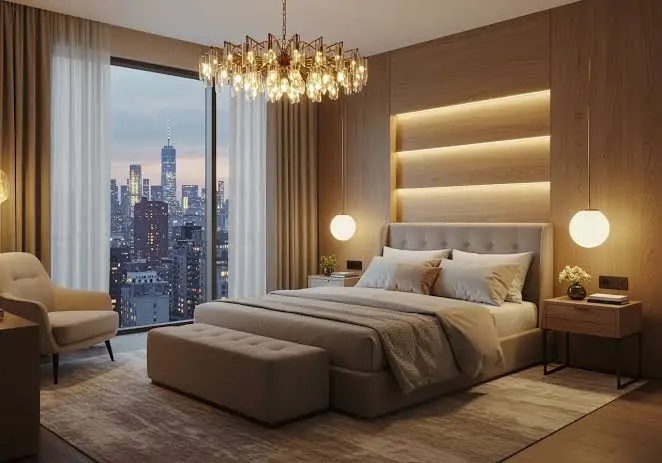
Walk into a hotel suite that makes you exhale, and you will rarely find a single bright light overhead. Instead, you see a soft glow behind the headboard, a warm lamp by the bed, and gentle light that lifts the ceiling. That calm, polished feeling is not an accident. It comes from layered lighting, and it is one of the clearest marks of premium home design. In a bedroom, where you relax, sleep, dress, and unwind, lighting does far more than help you see. Here is why layering matters and how to get it right.
What Are Lighting Layers?
Layered lighting means combining several types of light, each with a distinct job, instead of relying on one fixture. Designers usually describe four layers:
- Ambient: the soft, overall illumination that fills the room.
- Task: focused light for specific activities such as reading or dressing.
- Accent: light that highlights art, textures, or architecture.
- Decorative: fixtures that act as visual jewellery, such as a statement pendant or sculptural lamp.
Together, these layers let a bedroom shift from bright and practical in the morning to dim and restful at night.
Why One Ceiling Light Falls Short
A single central fixture floods the room evenly, which sounds sensible but creates problems. It casts harsh shadows on faces, flattens textures, and gives the room a clinical, office-like mood. It also offers no flexibility. You cannot read comfortably without lighting the whole room, and you cannot create a relaxed atmosphere without sitting in near darkness. Sophisticated bedrooms avoid this by distributing light at different heights and intensities, so the eye finds comfort wherever it rests.
Layer One: Ambient Lighting
Ambient light sets the base mood. In modern apartments and villas, it often comes from recessed downlights, cove lighting tucked into a false ceiling, or a soft central fixture. Cove lighting is a favourite in refined interiors because it washes the ceiling with indirect light, adding height and removing glare.
Keep ambient light gentle and dimmable. A bedroom rarely needs the brightness of a living room, and softer levels support the body’s natural wind-down before sleep.
Layer Two: Task Lighting
Task lighting solves practical needs without disturbing anyone else. Think of:
- Bedside sconces or pendants with adjustable arms for reading.
- Dressing area or wardrobe lighting, such as LED strips inside cabinets.
- Desk or vanity lights with good colour rendering for grooming.
Place bedside lights so the beam falls on the page, not into your partner’s eyes. Wall-mounted fixtures or hanging pendants also free up bedside table space, which keeps the design clean and uncluttered.
Layer Three: Accent Lighting
Accent lighting adds depth and personality. A narrow beam on an artwork, a wall washer on a textured panel, or a subtle glow behind a headboard turns plain surfaces into focal points. This is where a room moves from “well lit” to a true example of premium home design. Even a small accent light can make the space feel curated.
Layer Four: Decorative Lighting
A beautiful lamp or pendant is both a light source and furniture. In a bedroom, decorative pieces add warmth, scale, and character. A sculptural pendant above a reading chair or a pair of matching table lamps adds symmetry and a sense of occasion. Choose materials and finishes that complement your palette, whether that’s brushed brass, fluted glass or woven textures.
The Details That Make Layers Work
Layering is not just about adding more fixtures. A few technical details separate a polished result from a messy one.
- Colour temperature: Bedrooms feel best in warm white, roughly 2700K to 3000K. Cool, bluish light feels energetic and can interfere with winding down. Keep temperatures consistent across all fixtures, because mixed tones look unplanned.
- Colour rendering: Look for a high CRI, ideally 90 or above, so skin tones, fabrics and wood finishes look natural.
- Dimming and scenes: Every layer should ideally be dimmable and controllable separately. Scene presets, such as “Morning”, “Reading” and “Night”, let you transform the room with a single touch.
- Glare control: Select fixtures with recessed or shielded light sources so you don’t see bare bright points when lying in bed. Comfort matters more than showing off hardware.
- Night navigation: Low-level, warm footlights near the bed or along the floor help you move safely at night without waking fully.
Working With Daylight
Bangalore’s pleasant climate and bright mornings mean many bedrooms receive generous daylight. Layer curtains with sheers and blackout lining so you can soften or block light as needed. Artificial lighting should complement daylight, not fight it. Plan the evening scene around how the room looks once natural light fades, because that’s when your fixtures do their real work.
Common Mistakes to Avoid
- Relying on one overhead light.
- Mixing different colour temperatures.
- Skipping dimmers.
- Placing reading lights where they create glare or shadows.
- Over-lighting walls and ignoring the ceiling and bedside.
- Planning lighting after furniture and wiring are finished. Lighting needs to be designed early, so that circuits, switches, and ceiling details support it.
A Simple Starting Formula
If you want a reliable approach for an average master bedroom, try this: soft cove or recessed ambient light on a dimmer, two bedside task lights on separate switches, one accent light for art or a feature wall, one decorative piece that expresses your style, and warm, consistent colour temperature throughout. Then add smart controls if you like the convenience.
Conclusion
Layered lighting is what makes a bedroom feel calm, flexible and considered. By combining ambient, task, accent and decorative light, with warm tones, dimming and glare control, you create a space that supports both rest and routine. Planning early matters most. For a result that feels truly seamless, consider working with experienced luxury bedroom interior designers in Bangalore who can integrate lighting into the overall design from the very beginning.
WeDezine Studio is a Bangalore-based interior design studio that creates thoughtful, well-finished homes. Their team pays close attention to lighting, materials, and layout, helping clients design bedrooms that feel warm, balanced, and refined, with layered lighting planned from the start so every detail supports comfort and style.
Also Read
- https://smartsimiles.com/turning-down-the-volume-on-opioid-cravings-what-early-glp-1-studies-actually-found/
- https://smartsimiles.com/claude-sonnet-5-still-the-workhorse-a-year-later/
- https://smartsimiles.com/buying-thc-and-cbd-online-how-to-read-a-coa-decode-labels-and-shop-responsibly/