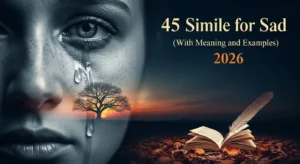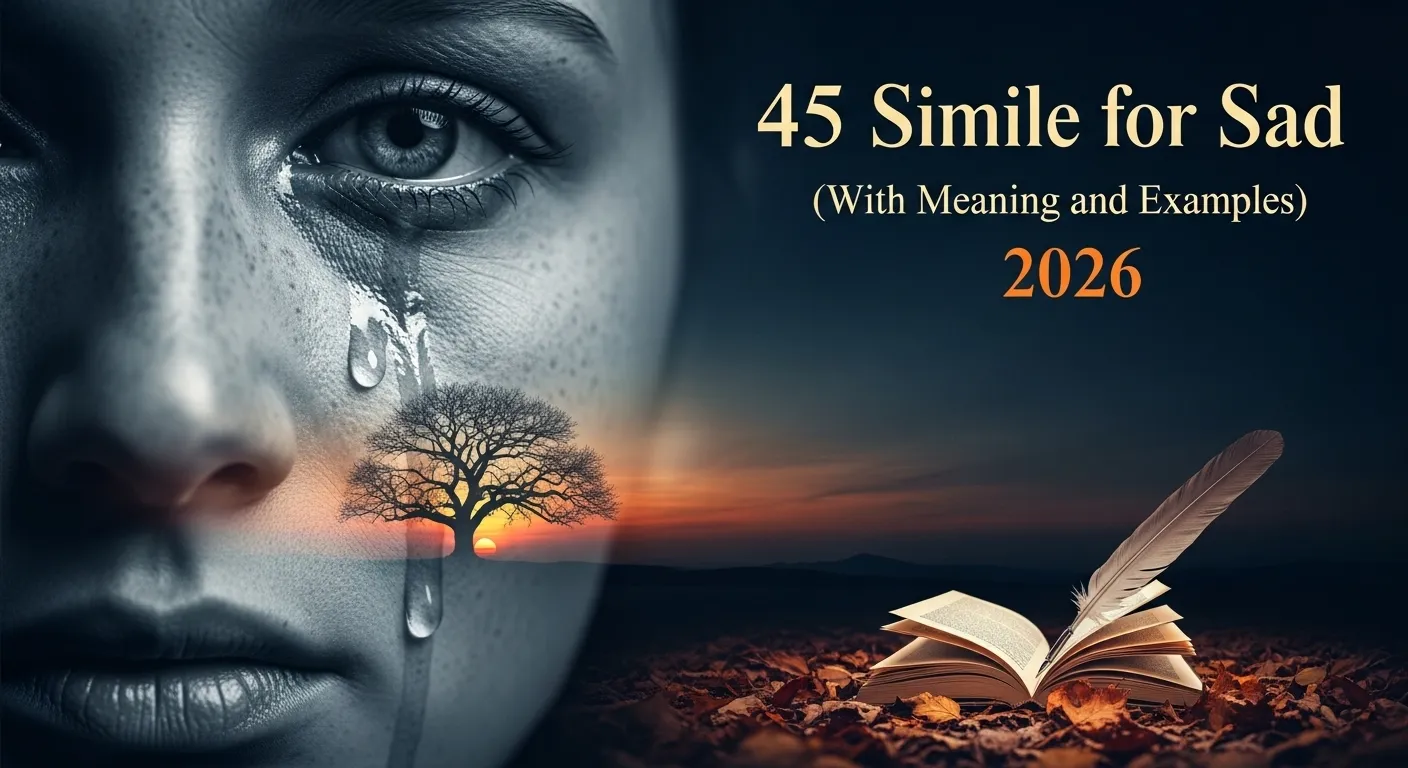
I remember a time when I felt deeply sad, like everything around me had lost its color. It was one of those quiet days when even small things felt heavy. I felt like a sky covered in dark clouds, ready to rain at any moment.
Maybe you’ve felt that too like your heart is full, but you can’t explain why.
During that time, I found it hard to express what I was feeling. Then I discovered how similes could help.
I started comparing my emotions to simple things, like saying, “I felt as sad as a lonely bird in the rain.” Somehow, it made my feelings easier to understand and share.
I realized that using similes wasn’t just about writing it was a way to release what I was holding inside.
If you’re feeling sad too, trust me, you’re not alone. Let’s explore how similes for sad can help you express those emotions better.
1. Sad like a rainy day
Meaning: Feeling gloomy or down.
Explanation: Rainy weather often represents sadness or quiet emotions.
Example:
- After hearing the news, he felt sad like a rainy day.
- The empty house made her mood sad like a rainy day.
2. Sad as a lonely bird
Meaning: Feeling alone and unhappy.
Explanation: Birds usually live in groups, so a lonely bird symbolizes isolation.
Example:
- She looked as sad as a lonely bird sitting on the fence.
- Without his friends, he felt as sad as a lonely bird.
3. Sad like a wilted flower
Meaning: Feeling weak, tired, or unhappy.
Explanation: A wilted flower loses its beauty, just like sadness can drain energy.
Example:
- After the argument, she felt sad like a wilted flower.
- His smile faded, and he looked like a wilted flower.
4. Sad as a cloudy sky
Meaning: Feeling dark or emotionally heavy.
Explanation: Clouds often symbolize a gloomy mood.
Example:
- His face looked as sad as a cloudy sky.
- The news made the day feel like a cloudy sky.
5. Sad like a lost puppy
Meaning: Feeling helpless or abandoned.
Explanation: A lost puppy seems confused and unhappy.
Example:
- He waited at the door like a lost puppy.
- She looked as sad as a lost puppy after her friend left.
6. Sad as a broken toy
Meaning: Feeling hurt or disappointed.
Explanation: A broken toy symbolizes lost happiness.
Example:
- When the game ended, he felt as sad as a broken toy.
- The child looked like a broken toy after losing the match.
7. Sad like a fading sunset
Meaning: A quiet, gentle sadness.
Explanation: A sunset slowly disappearing can symbolize fading joy.
Example:
- Her smile faded like a fading sunset.
- The memory left him sad like a fading sunset.
8. Sad as a silent room
Meaning: Feeling empty or lonely.
Explanation: Silence often reflects loneliness.
Example:
- After everyone left, the house felt as sad as a silent room.
- He sat there like a silent room filled with sadness.
9. Sad like a dropped ice cream
Meaning: Feeling disappointed suddenly.
Explanation: A dropped ice cream is a small but sad moment.
Example:
- She looked sad like a dropped ice cream after losing the prize.
- His face fell like someone who dropped their ice cream.
10. Sad as a forgotten song
Meaning: Feeling ignored or forgotten.
Explanation: A forgotten song symbolizes something once loved but now ignored.
Example:
- He felt as sad as a forgotten song.
- Her voice sounded like a forgotten song.
11. Sad like a dark night
Meaning: Feeling deep sadness.
Explanation: Night often symbolizes heavy emotions.
Example:
- His heart felt sad like a dark night.
- The memory stayed as dark as a sad night.
12. Sad as falling leaves
Meaning: Feeling emotional or nostalgic.
Explanation: Falling leaves often represent endings.
Example:
- Her voice sounded as sad as falling leaves.
- The goodbye felt like leaves falling from a tree.
13. Sad like a melting candle
Meaning: Slowly losing happiness.
Explanation: A candle melting shows something fading away.
Example:
- His hope melted like a candle in the dark.
- She felt sad like a melting candle.
14. Sad as an empty playground
Meaning: Feeling lonely or quiet.
Explanation: Playgrounds are usually full of joy, so emptiness feels sad.
Example:
- The school felt as sad as an empty playground.
- His heart felt like an empty playground.
15. Sad like a broken balloon
Meaning: Feeling disappointed or let down.
Explanation: A balloon popping can symbolize lost excitement.
Example:
- His excitement burst like a broken balloon.
- She looked sad like a broken balloon after the party ended.
Practical Exercise: Test Your Simile Skills
Questions:
- Complete the simile: Sad as a bird.
- Which simile means feeling lonely: a) rainy day b) lonely bird c) melting candle
- Complete the simile: Sad like a flower.
- Which simile represents fading happiness?
- Complete the simile: Sad as a playground.
- Which simile represents disappointment like losing something small?
- Complete the simile: Sad like a candle.
- Which simile means feeling forgotten?
- Complete the simile: Sad like a puppy.
- Which simile represents deep darkness of emotion?
Answers with Explanation
- Lonely bird This simile shows loneliness.
- Lonely bird It clearly represents being alone.
- Wilted flower It symbolizes weakness and sadness.
- Fading sunset It shows happiness slowly disappearing.
- Empty playground It represents loneliness and silence.
- Dropped ice cream A small but disappointing moment.
- Melting candle It symbolizes fading hope.
- Forgotten song It represents feeling ignored.
- Lost puppy It shows helpless sadness.
- Dark night It symbolizes deep emotional sadness.
Conclusion:
Similes are a simple but powerful tool in creative writing. They help writers turn ordinary sentences into vivid and emotional descriptions.
Instead of just saying someone is sad, you can use a simile for sad to paint a clearer picture for readers.
For example, phrases like “sad like a rainy day” or “as lonely as a lost puppy” make emotions easier to imagine. In simple terms, similes make writing more interesting, expressive, and memorable.
Now that you’ve seen several examples of similes, try creating your own. Think about things in everyday life that remind you of sadness, and turn them into similes using “like” or “as.”
With practice, you’ll soon become more confident in how to use similes in writing, and your stories will feel much more alive.

I am Chase Morgan, a young writer sharing ideas and inspiration on Smartsimiles.com.
I write to inspire readers with creative thoughts and meaningful words.